Choice Collision Centers has published consumer guidance explaining how automotive paint is matched after collision repair, with a specific focus on why a factory paint code does not function as a complete color-matching instruction. The September publication outlines how technicians use the original color information together with evaluation of the existing finish, computerized color-matching technology, refinishing procedures, and final visual inspection.
The guidance expands on Choice Collision Centers’ paint and refinishing information by addressing a practical misconception that can arise when a repaired or replacement panel requires refinishing. A vehicle’s paint code identifies its original color specification, but the refinishing process involves additional steps before that color is applied to a repaired component.
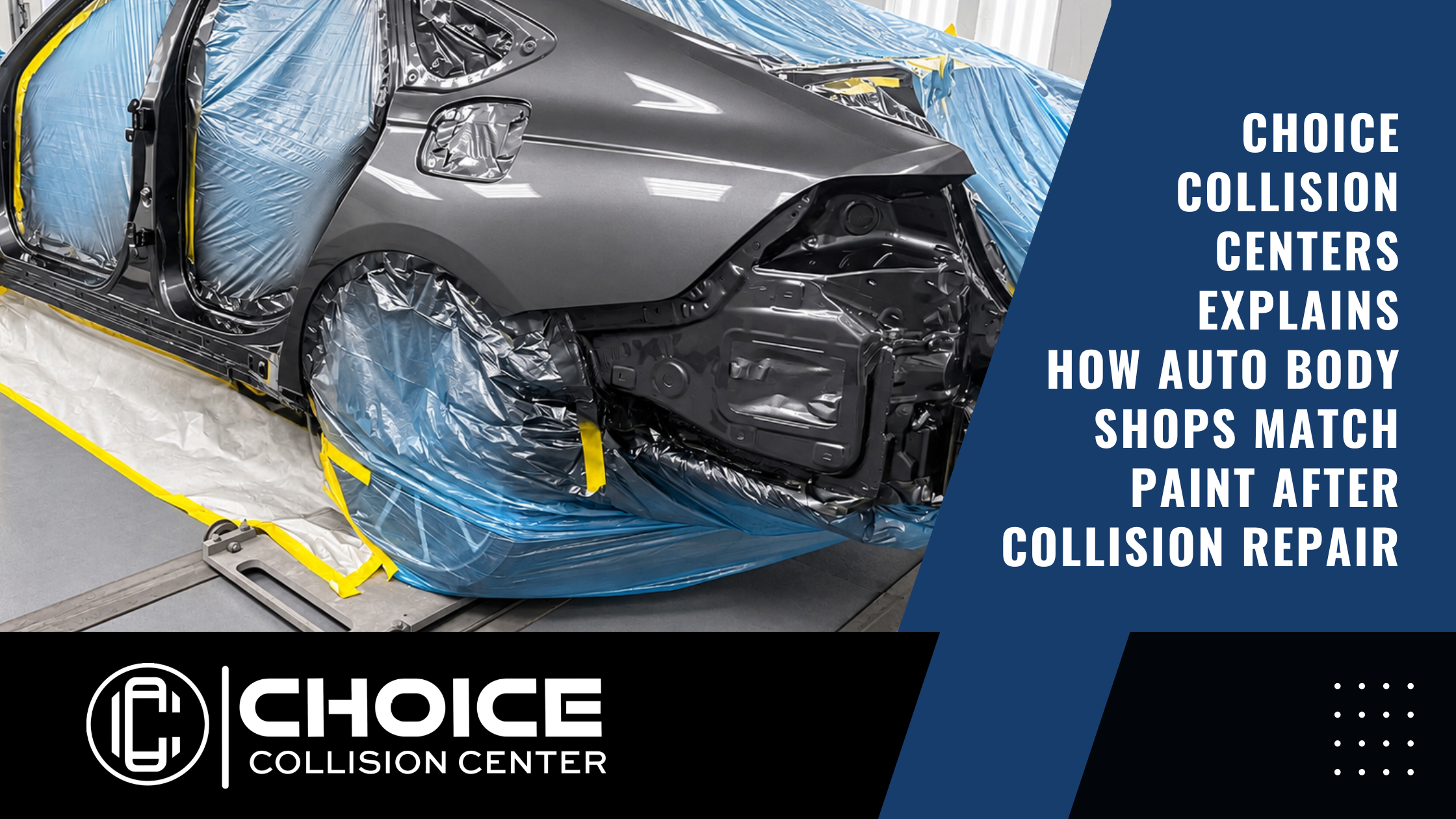
Technicians begin by identifying the vehicle’s paint information and evaluating the finish already present on surrounding panels. This comparison provides context for selecting a color formulation appropriate to the individual repair.
The type of finish also matters. Solid, metallic, pearl, and multi-stage colors have different visual characteristics. Metallic and pearl finishes can change in appearance with lighting and viewing angle, making evaluation of the existing vehicle an important part of the process.
Choice Collision Centers uses computerized color-matching technology to support this evaluation. The technology provides color information that can be considered alongside the factory paint code and the appearance of the existing finish. Technician evaluation remains part of determining how the selected formulation will be used on the individual vehicle.
The next stage is preparation of the repaired or replacement component. The surface must be prepared for the applicable coating system before color application begins. Preparation varies according to the component, substrate, repair performed, and refinishing materials being used.
Additional information about the body work that precedes refinishing is available through Choice Collision Centers’ auto body repair information.
Application technique becomes particularly relevant with finishes containing metallic or pearl effects. The way coating materials are applied can influence their final appearance, which is why selecting a formulation is only one part of the refinishing process.
Blending may also be used when appropriate. This technique creates a gradual color transition between a refinished area and an adjoining panel rather than establishing an abrupt boundary between the two finishes. Whether blending is part of the repair depends on the color, panel arrangement, repair location, and refinishing procedure.
The guidance also addresses differences between component materials. A painted plastic bumper and an adjoining metal panel can use different substrates and sit at different angles on the vehicle. Those characteristics can influence how the surfaces appear relative to each other even when they are associated with the same original color specification.
Choice Collision Centers uses waterborne paint technology as part of its refinishing process. Within that process, the coating system is combined with surface preparation, color evaluation, application, curing, and inspection rather than treated as a stand-alone method of achieving a color match.
Final inspection completes the sequence. After the applicable coating and finishing operations have been performed, technicians can evaluate the refinished component in relation to surrounding areas, including its color appearance and overall surface condition.
The September publication concentrates on this sequence because paint matching is one of the most visible parts of collision repair but can be reduced to the idea of looking up a paint code. The new guidance instead separates the process into four stages: identifying the original color information, evaluating the existing finish, applying the selected refinishing process, and reviewing the completed appearance.
This framework gives consumers a more precise explanation of what occurs between completion of body repair and final inspection. It also distinguishes color identification from color application. The first establishes technical information about the original finish, while the second requires that information to be applied within the conditions of the individual repair.
Additional information about the company’s Massachusetts facility is available through the Fall River location resource.
The central point of the September publication is that automotive paint matching is a refinishing process rather than a single paint-code lookup. Factory color information establishes the reference point, while evaluation, preparation, application, blending when appropriate, and inspection determine how the finish is addressed on the repaired vehicle.
Choice Collision Centers is a locally owned and operated collision repair company established in 1997. The company began in a small Fall River auto body shop and provides collision repair, auto body repair, and paint and refinishing services in Massachusetts and Rhode Island. Its Fall River facility is located at 645 Brayton Avenue, Fall River, MA.
###
For more information about Choice Collision Center, contact the company here:
Choice Collision Center (Fall River)
Steve Melo
(401) 245-0213
information@choicecollisioncenters.com
645 Brayton Ave, Fall River, MA 02721